On-Grid vs Off-Grid vs Hybrid Solar Systems: Complete Guide for India
Complete comparison of on-grid, off-grid, and hybrid solar systems for Indian homes. Includes component lists, costs, pros and cons, and state-wise recommendations to help you choose the right system.
On-Grid, Off-Grid, and Hybrid: Which Solar System is Right for You?
India's solar revolution is in full swing, with over 20 GW of rooftop solar capacity installed by 2026. But choosing between on-grid, off-grid, and hybrid solar systems remains confusing for most homeowners. This guide explains each system type, their components, costs, and which works best for different Indian households.
Understanding the Three Solar System Types
1. On-Grid (Grid-Tied) Solar System
An on-grid system connects directly to the electricity grid. It has no battery storage — excess solar power is exported to the grid, and you draw power from the grid when solar isn't enough.
Components
- Solar panels
- Grid-tied inverter (string or micro inverter)
- Net meter (provided by DISCOM)
- AC distribution box, wiring, mounting structure
How It Works
- Solar panels generate DC electricity during daytime
- Inverter converts DC to AC and feeds your home
- Excess power flows to the grid — your meter runs backward (net metering)
- At night or on cloudy days, you draw from the grid normally
- Monthly bill = Grid consumption – Solar export
Pros
- ✅ Cheapest option (no battery cost)
- ✅ Lowest maintenance
- ✅ Government subsidies available (PM Surya Ghar Yojana)
- ✅ Net metering credits reduce electricity bill to near-zero
- ✅ System pays for itself in 4-5 years
Cons
- ❌ No power during grid outages (safety feature — anti-islanding)
- ❌ Dependent on DISCOM net metering policy
- ❌ No backup capability
2. Off-Grid Solar System
An off-grid system operates independently with battery storage. It's not connected to the electricity grid at all.
Components
- Solar panels
- Charge controller (PWM or MPPT)
- Battery bank (lead-acid or lithium)
- Off-grid inverter
- Wiring, mounting, safety equipment
How It Works
- Solar panels charge the battery bank during daytime
- Inverter converts stored DC power to AC for your home
- Battery provides power at night and during cloudy periods
- No grid connection — complete energy independence
Pros
- ✅ Complete energy independence
- ✅ Works in areas without grid connectivity
- ✅ No electricity bills ever
- ✅ Not affected by grid outages or tariff hikes
Cons
- ❌ Most expensive option (battery costs 40-50% of total)
- ❌ Batteries need replacement every 5-10 years
- ❌ System must be sized for worst-case (monsoon, winter)
- ❌ No government subsidy for off-grid systems
- ❌ Excess solar energy is wasted (no grid export)
3. Hybrid Solar System
A hybrid system combines the best of both — grid connectivity with battery backup. It's the most versatile but also the most complex.
Components
- Solar panels
- Hybrid inverter (with battery charger, grid-tie, and off-grid capabilities)
- Battery bank
- Net meter (optional)
- Complete wiring and safety equipment
How It Works
- Solar panels power your home and charge batteries simultaneously
- Excess power is exported to the grid (net metering)
- During grid outage, system automatically switches to battery
- At night, draws from battery first, then grid
- Smart energy management prioritizes solar > battery > grid
Pros
- ✅ Backup power during outages
- ✅ Net metering for bill savings
- ✅ Maximum solar utilization
- ✅ Energy independence with grid safety net
Cons
- ❌ Higher cost than on-grid (battery added)
- ❌ More complex installation
- ❌ Hybrid inverters cost 30-50% more than grid-tied
Cost Comparison (3kW System)
| Component | On-Grid | Off-Grid | Hybrid |
|---|---|---|---|
| Solar Panels (3kW) | ₹90,000 | ₹90,000 | ₹90,000 |
| Inverter | ₹25,000 | ₹30,000 | ₹45,000 |
| Battery Bank | ₹0 | ₹80,000-1,20,000 | ₹60,000-90,000 |
| Mounting + Wiring | ₹20,000 | ₹25,000 | ₹25,000 |
| Net Meter | ₹2,000 | ₹0 | ₹2,000 |
| Total Before Subsidy | ₹1,37,000 | ₹2,25,000-2,65,000 | ₹2,22,000-2,52,000 |
| Govt. Subsidy (PM Surya Ghar) | -₹78,000 | ₹0 | Varies |
| Net Cost | ₹59,000 | ₹2,25,000-2,65,000 | ₹1,80,000-2,52,000 |
Which System Should You Choose?
Choose On-Grid If:
- You have reliable grid power (less than 2-3 hours of cuts per day)
- Your DISCOM supports net metering
- Budget is a primary concern
- You want the fastest ROI
- You already have an inverter + battery for backup
Choose Off-Grid If:
- No grid connection available (rural, farmhouse, remote area)
- Grid is extremely unreliable (8+ hours of cuts daily)
- You want complete energy independence
- Budget is not the primary constraint
Choose Hybrid If:
- You want solar savings AND backup power
- Power cuts are moderate (2-6 hours daily)
- You can invest in a higher upfront cost
- You want a future-proof system (works with EV charging, battery expansion)
- You're in a metro area with occasional long outages
State-Wise Recommendation
| Region | Power Cut Pattern | Recommended System |
|---|---|---|
| Delhi NCR | Rare, 1-2 hours summer | On-Grid |
| Mumbai, Bangalore | Rare | On-Grid |
| UP, Bihar (Urban) | 4-8 hours daily | Hybrid |
| UP, Bihar (Rural) | 8-12 hours daily | Off-Grid or Hybrid |
| Rajasthan, Gujarat | 2-4 hours, high solar | On-Grid or Hybrid |
| Rural India | No grid / very unstable | Off-Grid |
Future Trends
Hybrid systems are the fastest-growing segment in India, expected to capture 40% of the residential solar market by 2028. Falling lithium battery prices and smart inverter technology make hybrid increasingly affordable. Virtual Power Plants (VPPs), where hybrid homes collectively sell stored energy, are being piloted in Karnataka and Gujarat.
Related Articles
Solar Panel Types: Mono vs Poly vs Bifacial
A comprehensive guide to different types of solar panels available in India, their efficiency ratings, and which one is best for your setup.
Solar System Sizing: Calculate Your Exact Requirement
Step-by-step guide to calculate the right solar panel size, inverter capacity, and battery bank for your home or office power needs.
How to Install a Home Inverter System: Step-by-Step Guide
Complete step-by-step guide to installing an inverter and battery system at home. Covers wiring, safety precautions, earthing, MCB connections, and when to call a professional electrician.
Frequently Asked Questions
आपके काम की और जानकारी
संबंधित प्रोडक्ट्स
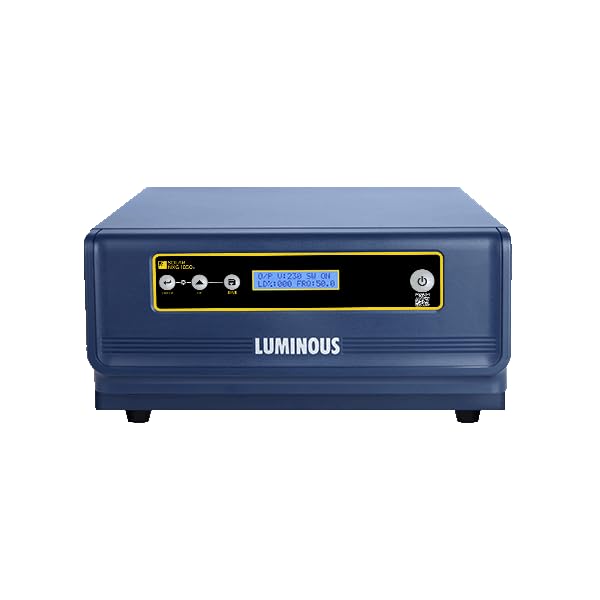
Luminous NXG+ 1850e Blue Solar Hybrid Inverter – 1500VA/24V, Pure Sine Wave, Intelligent Solar Optimization, Dual Battery Support
9,890

Luminous BIS Certified Polycrystalline 170 Watt-12Volt Solar Panel for Home with PID Resistance Technology and Severe Weather Resilience, 25 Years Warranty (Pack of 1)
5,049

Microtek Super Power 900 Advanced Digital 800VA/12V Inverter
4,199

Microtek Heavy Duty Pure Sinewave UPS 1550 SW 12V
7,149
संबंधित आर्टिकल्स और गाइड्स
3 Solar Panels to Light Up Your Home This Summer
Solar Panel tips
पढ़ेंLuminous Launches 5kVA Hybrid Solar Inverter with Built-In IoT Monitoring
Luminous Power Technologies has unveiled its next-generation 5kVA hybrid solar inverter featuring built-in Wi-Fi, mobile app control, and real-time energy monitoring. The inverter supports both on-grid and off-grid modes.
पढ़ेंSunpower Renewables Unveils Australian-Engineered Solar Hybrid Inverter-Battery Systems in India
Sunpower Renewables launches Australian-designed solar hybrid inverter-battery systems in India, offering higher efficiency, modular battery options and improved backup for homes and small businesses.
पढ़ेंInvoltics GTSI Hybrid Inverter 2026: Smart Choice for Indian Homes
Involtics' 2026 GTSI hybrid inverter targets residential solar and battery setups with enhanced efficiency and seamless integration. This benefits Indian consumers seeking reliable backup and grid-tie flexibility.
पढ़ें