Lithium vs Lead Acid Battery for Inverter: Complete Comparison 2026
Comprehensive comparison of lithium-ion and lead-acid batteries for home inverters in India. Covers cost, lifespan, efficiency, weight, maintenance, and which is better for your budget and power needs.
Lithium vs Lead Acid: The Great Indian Battery Debate
As Indian homes increasingly depend on inverter systems for backup power, the choice between lithium-ion and lead-acid batteries has become one of the most critical decisions. With lithium battery prices dropping 40% since 2023, the economics of this comparison have shifted dramatically. This guide provides a thorough, data-driven analysis to help you make the right choice for your home.
Understanding the Two Battery Technologies
Lead-Acid Batteries
Lead-acid batteries have been the backbone of the Indian inverter market for over three decades. These batteries use lead plates submerged in a sulfuric acid electrolyte solution. The two main variants are:
- Flat Plate Batteries: Less expensive, shorter lifespan (2-3 years), suitable for areas with infrequent power cuts.
- Tubular Batteries: More durable, longer lifespan (4-7 years), better deep discharge performance. The industry standard for most Indian homes.
Lithium-Ion Batteries
Lithium-ion batteries use lithium compounds as the cathode material. The most common chemistry for home inverters is Lithium Iron Phosphate (LiFePO4), chosen for its safety, stability, and long cycle life. Key variants include:
- LiFePO4 (LFP): Most popular for home use. Excellent safety, 3000-5000 charge cycles, operates well in Indian heat.
- NMC (Nickel Manganese Cobalt): Higher energy density but less thermally stable. Common in EVs, less used in home inverters.
Head-to-Head Comparison
| Parameter | Lead-Acid (Tubular) | Lithium-Ion (LiFePO4) |
|---|---|---|
| Upfront Cost (150Ah equivalent) | ₹12,000 – ₹18,000 | ₹28,000 – ₹45,000 |
| Usable Capacity | 50-60% of rated capacity | 80-95% of rated capacity |
| Lifespan (Cycles) | 800-1200 cycles | 3000-5000 cycles |
| Lifespan (Years) | 3-5 years | 8-12 years |
| Weight (150Ah equiv.) | 45-55 kg | 12-18 kg |
| Charging Efficiency | 75-85% | 95-99% |
| Maintenance | Water topping every 2-3 months | Zero maintenance |
| Self-Discharge | 5-15% per month | 1-3% per month |
| Operating Temperature | 20°C to 45°C | -20°C to 60°C |
| Warranty | 36-60 months | 60-120 months |
Total Cost of Ownership (TCO) Analysis
While lithium-ion batteries cost 2-3x more upfront, the total cost over 10 years tells a different story:
Scenario: 1 kVA Inverter, Daily 3-Hour Usage
| Cost Factor | Lead-Acid (10 Years) | Lithium (10 Years) |
|---|---|---|
| Initial Battery Cost | ₹15,000 | ₹35,000 |
| Replacements Needed | 2 replacements (₹30,000) | 0 replacements (₹0) |
| Maintenance Cost | ₹3,000 (distilled water, checkups) | ₹0 |
| Electricity for Charging | ₹18,000 (85% efficiency) | ₹13,000 (97% efficiency) |
| Total 10-Year Cost | ₹66,000 | ₹48,000 |
Over 10 years, lithium-ion batteries save approximately ₹18,000 — a 27% reduction in total cost of ownership despite the higher upfront investment.
Performance in Indian Conditions
Heat Tolerance
India's summer temperatures regularly exceed 45°C in many regions. Lead-acid battery performance degrades significantly above 35°C, with each degree above 25°C reducing lifespan by approximately 6 months. LiFePO4 batteries tolerate heat much better, with a wider operating range and less performance degradation at high temperatures.
Power Cut Patterns
If your area experiences:
- Frequent short cuts (1-2 hours daily): Lead-acid tubular batteries work well and offer better value.
- Long daily cuts (4-8 hours): Lithium batteries shine with their deep discharge capability and faster charging.
- Occasional cuts (few per week): Lead-acid is sufficient and more cost-effective.
Space Constraints
Lithium batteries occupy 60-70% less space and weigh 70% less than equivalent lead-acid batteries. For apartments and small homes, this is a significant advantage.
Safety Considerations
Lead-acid batteries produce hydrogen gas during charging, requiring ventilation. They can also leak acid if tilted or damaged. LiFePO4 batteries are sealed, produce no gases, and are chemically more stable. Both types are safe when used correctly with BIS-certified inverters.
Which Should You Choose?
Choose Lead-Acid If:
- Your budget is tight (under ₹20,000 for battery)
- Power cuts are infrequent (less than 2 hours daily)
- You have adequate ventilation and floor space
- You prefer lower upfront cost over long-term savings
Choose Lithium-Ion If:
- You can invest ₹30,000-45,000 upfront
- Power cuts are long and frequent
- Space is limited (apartment living)
- You want zero maintenance
- You plan to add solar panels in the future
Top Brands in India (2026)
Lead-Acid
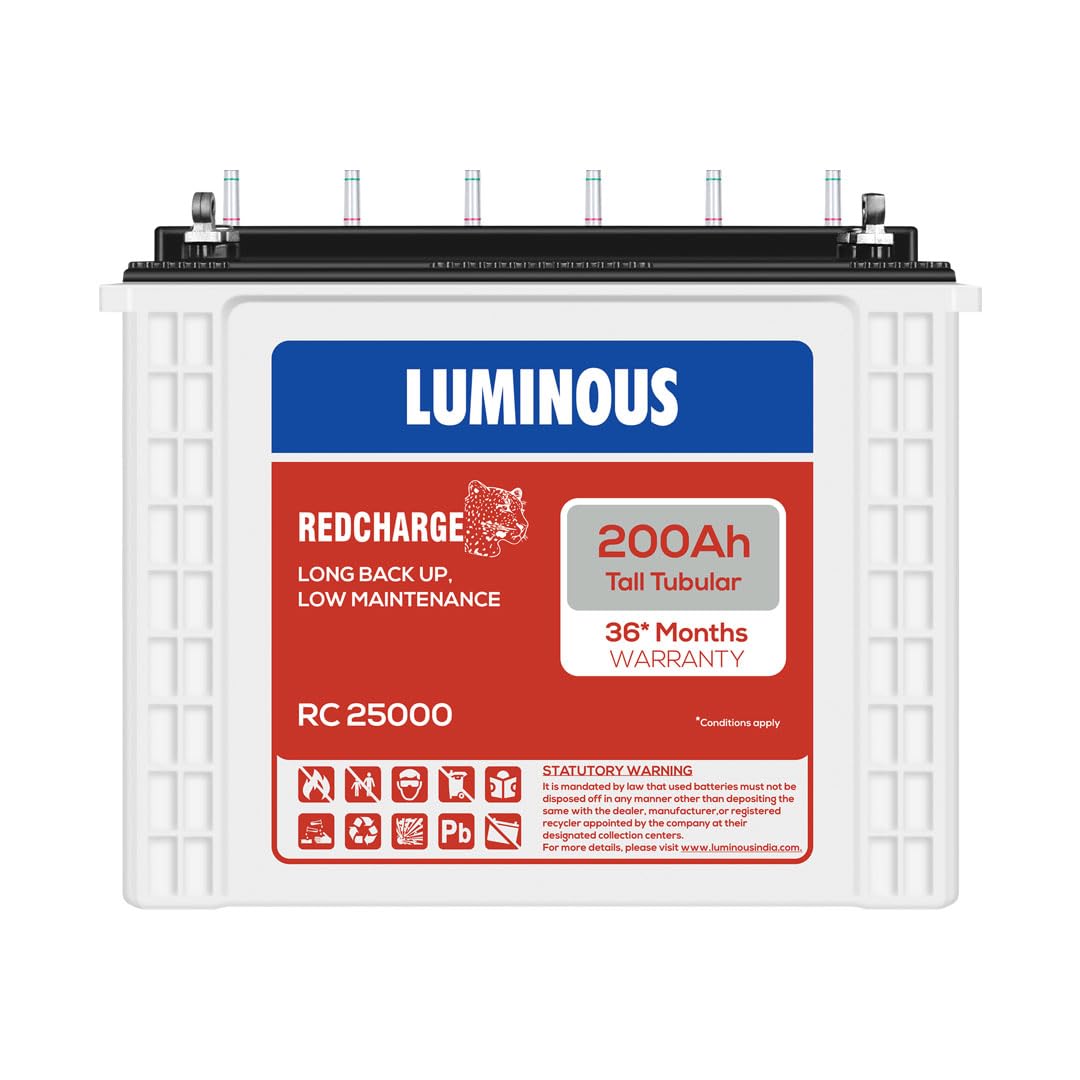
- Luminous: Red Charge, ILTT series — market leader with wide service network
- Amaron: Known for reliability and consistent performance
- Exide: India's oldest battery brand, extensive availability
- Livguard: Growing brand with competitive pricing
Lithium-Ion
- Luminous: Li-ON series — first major brand to offer affordable lithium inverter batteries
- Waaree: Strong in solar-compatible lithium storage
- Loom Solar: Wall-mounted lithium batteries gaining popularity
- A-Grade Cells: Several brands use Samsung/CATL cells in their packs
Future Outlook
Lithium battery prices are projected to fall another 25-30% by 2028, driven by increased domestic manufacturing under India's PLI scheme. The government's push for electric vehicles is creating economies of scale that benefit the home energy storage market. By 2028-2029, lithium-ion is expected to achieve price parity with lead-acid on an upfront cost basis.
Verdict
For most Indian homes in 2026, tubular lead-acid batteries remain the practical choice if budget is the primary concern. However, if you can afford the higher upfront cost, lithium-ion (LiFePO4) batteries offer superior value over their lifetime — especially in hot climates, space-constrained homes, and areas with frequent power cuts. As prices continue to fall, lithium-ion will increasingly become the default choice.
Related Articles
Complete Inverter Buying Guide 2026
Everything you need to know before buying an inverter for your home — capacity calculation, types, brands, and price comparison across India.
How to Choose the Right Battery for Your Inverter
Tubular vs flat plate vs lithium-ion — understand the differences, pros/cons, lifespan, and maintenance requirements of each battery type.
What Determines Inverter Battery Price in India? Complete Price Guide
Understand every factor that affects inverter battery pricing in India — from raw material costs and brand premiums to capacity ratings, technology type, and seasonal demand. Make informed purchase decisions.
Frequently Asked Questions
आपके काम की और जानकारी
संबंधित प्रोडक्ट्स


संबंधित आर्टिकल्स और गाइड्स
The Ultimate Guide to Selecting the Best Inverter Battery for Home
When you are looking for a reliable power backup and perfect UPS, choosing the right inverter battery for home is essential. Power outages can disrupt your daily routine, affect your work-from-home setup, and cause inconvenience.
पढ़ेंInverter Battery Price Comparison: What to Expect in 2026
Compare inverter battery prices for 2026, analyzing trends, factors influencing costs, and what consumers can anticipate in the evolving market landscape.
पढ़ेंLithium-Ion Battery Prices in India Drop 18% in Q1 2026, Accelerating Solar Adoption
Lithium-ion battery prices in India have fallen by 18% in the first quarter of 2026, driven by increased domestic manufacturing and falling global raw material costs. This makes residential solar storage systems significantly more affordable.
पढ़ेंExide Industries Enters Residential Lithium Battery Market with New LifePower Series
Exide Industries has launched its LifePower series of residential lithium iron phosphate (LFP) batteries, available in 2.5kWh, 5kWh, and 10kWh capacities. The batteries are designed for solar energy storage.
पढ़ेंTop 10 Inverter Batteries for Indian Homes in 2025: Best Picks
Discover the top 10 inverter batteries for Indian homes in 2025. Find robust, long-life options across tubular, flat plate and lithium types to match power cuts, budgets and solar setups.
पढ़ें